.jpg?format=w480)
Abandoned Village
A village just like a human is a result of love and can be reducted to rubble, if left without love and care.
These offbeat shorts go off the beaten track and bring something you never knew you wanted.
.png?format=w1200)
These offbeat shorts go off the beaten track. Eccentric, boundary-crossing, peculiar, bizarre, unorthodox, weird, idiosyncratic… Call it what you want. But these animated shorts definitely bring something you never knew you wanted. Curated by Anna Eijsbouts and Karolina Głusiec.
A village just like a human is a result of love and can be reducted to rubble, if left without love and care.
.png?format=w480)
Anywhere But Here (2021) is a metacommentary film about wanting to go places and see new faces, but being prevented from doing so by the pandemic. The narrator unravels a bittersweet resolution in the self-reflexive filmmaking process as we dive deeper into her dreamscape.
-43507.jpg?format=w480)
A lady met a lovely beast, a slimy one.
.jpg?format=w480)
Filmed on 16mm film, this visual expression is rooted in archival materials and based on a poem by Hans Magnus Enzensberger. It speaks of forgotten people, their lives and their deeds.
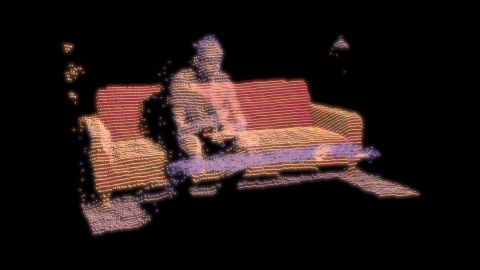
A life insurance company uses an AI algorithm to determine the risk of a new applicant. The subsequent denial sparks a period of introspection for the individual in question.
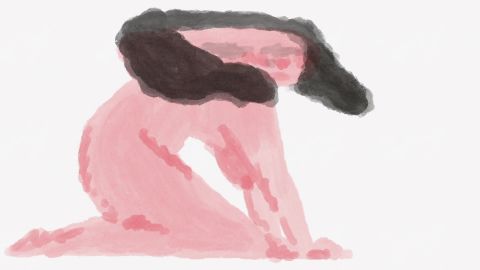
The animated body shifts in smear frames through the history of painting, parroting famous depictions of women. She tests the postures by inhabiting them and promptly discarding them, rejecting the fantasy that each represents. The cartoon body is confined by the frame but thrives in constant transition.
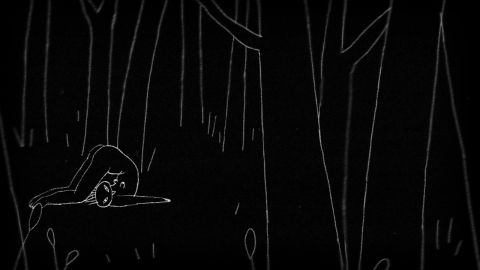
Marina really wants to sleep, but it's not that simple. Marina has lost her pillow, and the little forest pranksters do not help her to search at all for some reason.

.png?format=w480)
The Candle. The Myth. The Legend. Mountain Lodge.
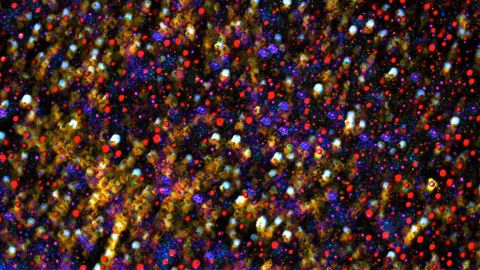
The catastrophe is tirelessly repeated in Hollywood cinema. The genre of the disaster movie hints at the collective psyche of the respective historical epochs. The perspective of a postmodern longing for moments of spectacular destruction, which briefly interrupts the dull monotony in late capitalist consumerism, shows how contradictory postmodern pop culture is. The disaster movie is symptomatic for the longing to overturn the status quo as well as the opposite desire to find it instantly restored.
Cinema has defined standards for how real life disasters should be dealt with. When science fiction and horror films illustrated large-scale destruction in the Cold War era, public perception became increasingly determined by fantastic ideas. The special effects since the 1990s have lead to a more realistic representation of destruction. Not only individual ships, planes or buildings are destroyed, but entire cities. In recent years, Hollywood has released a large number of disaster movies that proclaim a politically cheap, pious, ecological message. The end of history is now replaced by the end of nature.
On the one hand, Kohlberger’s film deals with the romantic idea of the apocalypse by exploiting the spectacular images of destruction in the »Cinema of Attractions« with its emphasis on visual effects. The secret pleasure of the catastrophe is above all a symbol of an inadequate reaction, since these films never actually deal with an appropriate social critique, or talk about what really is responsible for the problems depicted on the screen. On the other hand, the renewed establishment of the known order as a happy ending is not fulfilled here.
Kaboom Animation Festival is the one-stop-shop for the latest and greatest in all things animated. Ranging from cutting-edge experimental arthouse to colorful stories for families and kids, Kaboom will cater to the animation needs of all. Yes, even yours, my amazing weirdo friend!
© 2026. Website by Have a Byte!