Pierre Hebert
Free Radicals by Len Lye (1958)
Free Radicals (as well as some of the McLaren’s films like Blinkity Blank, but I feel more in tune with Lye’s more radical approach) was a major influence at the beginning of my career and it remained an inspiration up to the present day as an extraordinary example of the bodily aspect of animation.
History of the Main Complaint by William Kentridge (1996)
Touring Holland by Bicycle by Paul de Nooijer and Jerry Musser (1981)
Two totally opposite films in their emotional character, dramatic and somber on one side vs funny and whimsical on the other) are two good examples of how animation can go beyond the borders of the structured institutions of animation and relate to other practices in other fields of art, like photography and painting. The two films also bear an indirect relationship to my current series project Places and Monuments, due to their approach to ordinary places of daily life. Above all, all three films are characterized by a very crude texture and a very pregnant physical feeling in their approach of the flow of time and all three have no relationship whatsoever with the classical technique of animation. They are the works of people who picked up the idea of animation not as something you have to learn but as something you just grasp anyway you can when you bump into it, and just do something unusual.
Job, Joris & Marieke
Jojo in the Stars by Marc Craste (2003)
We saw Jojo in the Stars by Marc Craste/ studio AKA when we were in the process of founding our own studio. At the time, we only knew big animation studios like Disney and Pixar on the one hand and plodding attic artists on the other. Studio AKA
combines their commissioned work and free work so well that there is no difference between the two; a studio with an entirely unique style. We wanted that, too! What also impressed us was the technique, computer 3D, but beautifully done! It was a reason for us to train ourselves in this, too. This film gave us, a beginning studio, a useful insight in which direction we wanted to take.
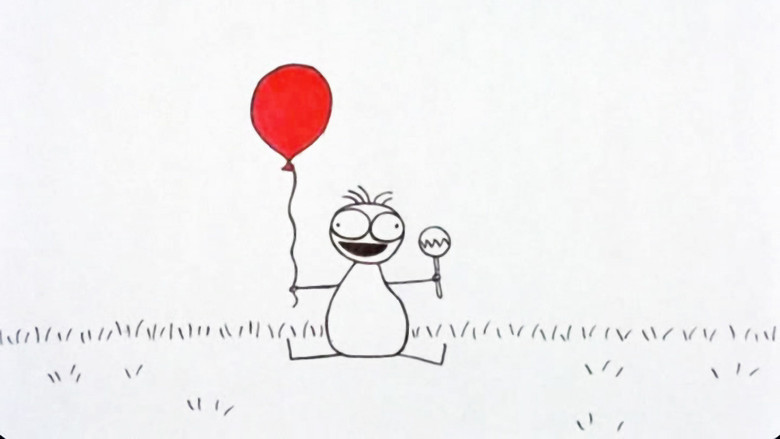
Billy’s Balloon by Don Hertzfeldt (1998)
The first time we saw Billy’s Balloon by Don Hertzfeldt, our first thought was ‘This looks clumsy’. But a few seconds later, we were rolling under the table with laughter. We were flabbergasted that someone could gain so much effect with so little means. The timing is great and the exact repetition of the actions seems a lazy animator’s trick, but it is extremely funny. The central idea is completely absurd, but still credible owing to the little means used (which is why some people don’t find it funny at all). It is a shining example of how you can achieve a lot with little.
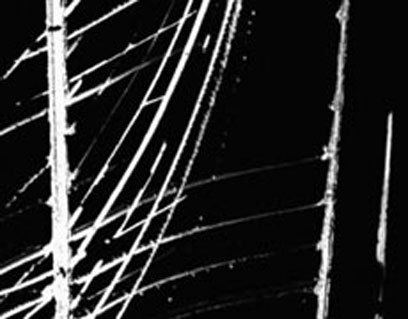

Parallel montage between a car crash and hospital treatment. Questions of guilt and responsibility weigh down on Soho Eckstein.
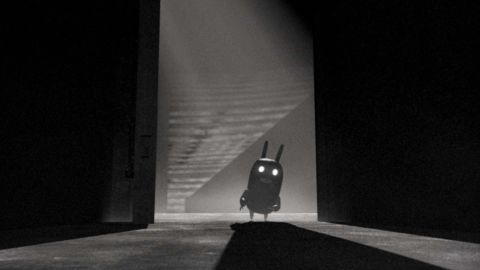
A story of love, self-sacrifice and jealousy played out against a black-and-white world that is both nightmarish and hauntingly beautiful.

A group runs round the table faster and faster in a small room.
Kaboom Animation Festival is the one-stop-shop for the latest and greatest in all things animated. Ranging from cutting-edge experimental arthouse to colorful stories for families and kids, Kaboom will cater to the animation needs of all. Yes, even yours, my amazing weirdo friend!
© 2026. Website by Have a Byte!