A Fortified City
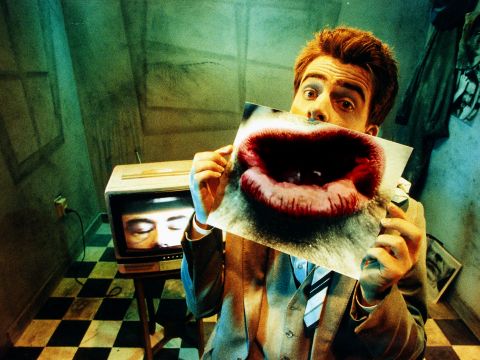
Filmmakers and visual artists attempt to define the medium film.
.jpg?format=w1200)
International sections featuring films by the jury members of this year’s competitions bear witness to the diversity of the juries and the animation medium.
Filmmakers and visual artists attempt to define the medium film.

Two men in chairs by the fireplace and photos moving in front of their heads.
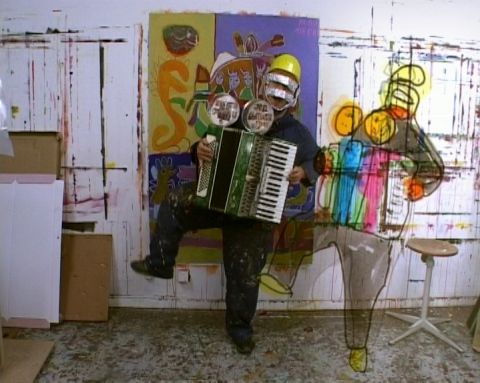
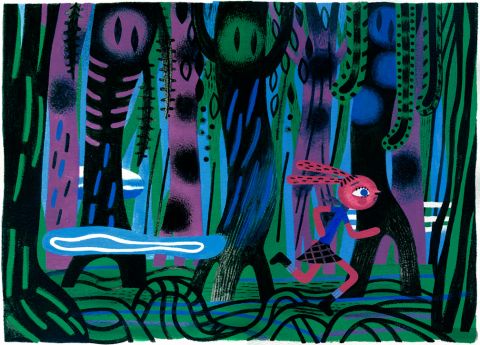
This is the story of Lola, a teenager who learns to love life by discovering the fear and death. She falls into an inner world which irresistibly draws her, digests her, shakes her unto the point to be spitted out to life more lively and cheerful.
.jpg?format=w480)
« I think that, when moving, you take over your own life. When you're free to come and go, to have gestures of... love, tenderness, anger, no matter. So when you are deprived of the ability to move, as I am, as many others are... in order to survive you need to reinvent movement. What goes on in my mind is not just intellectual. It's a way of re-creating an inner space which sets me free » Benoît Labaye
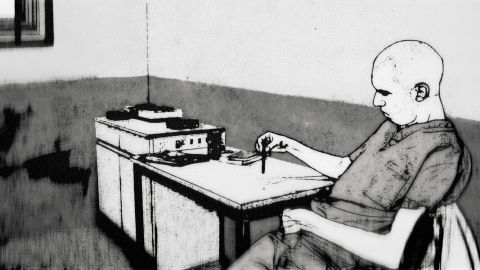
6 m² for living…
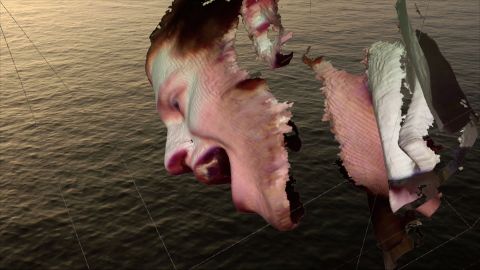
Veni Vidi Nescio (I Came, I Saw, I Don’t Know)
a film by Christopher Holloran
Shot in a Japanese theme park that replicates a Dutch town, Veni Vidi Nescio explores ideas of displacement and dislocation through conversations between two Amsterdammers as they discuss home, work and responsibility.
On screen we meet two Japanese girls and their sound recordist as we are taken through the replica Holland and the islands of Nagasaki via experimental narrative and animation.
Vidi Vidi Nescio (I Came, I Saw, I Don't Know) was inspired by the writing of Jan Hendrik Frederik Grönloh (aka Nescio). It was funded in part by the Young Amsterdam Artfund (YAA) and the European Exchange Academy (EEA).

A girl and boy on separate sides of the world (NY & Amsterdam) both lead fantastical lives but are incapable of meeting. The film is loosely based on a Wile E. Coyote and Roadrunner sketch where Wile E. paints a tunnel on a rock that the Roadrunner passes through.
It's made using my own technique of projecting onto paper and then cutting out portions of the film to illustrate the hyperreal mediums that skew our vision.
The characters exist in their own hyperreal worlds, oblivious to the fact that their surroundings are merely fictionalised. Yet they still doggedly try to meet, to break away from their 'painted tunnels'.
Wile E. serves as a deconstruction of hyperreal drama in a cinematic format. Numerous tropes of the cinematic language that usually goes unquestioned are identified and made as visible as possible whilst still retaining an engaging veneer.
The edges of the screen become observable, the screen floats within it’s own frame of reference. Music and image are separated from speech to distinguish which one does what. The music itself is cheaply manipulative and the 3 part basic structure of introduction, disagreement and conclusion is strikingly clear. Even the narrative itself is an absurdist exploitation of elementary filmmaking.
Yet even when everything is visually and aurally laid on a platter, the audience will fight to ignore something they cannot compute and will instead settle on engaging with the basic premise that it’s just a film.
Kaboom Animation Festival is the one-stop-shop for the latest and greatest in all things animated. Ranging from cutting-edge experimental arthouse to colorful stories for families and kids, Kaboom will cater to the animation needs of all. Yes, even yours, my amazing weirdo friend!
© 2026. Website by Have a Byte!