.jpg?format=w480)
Bubsy Berkeley’s Tribute to Mae West
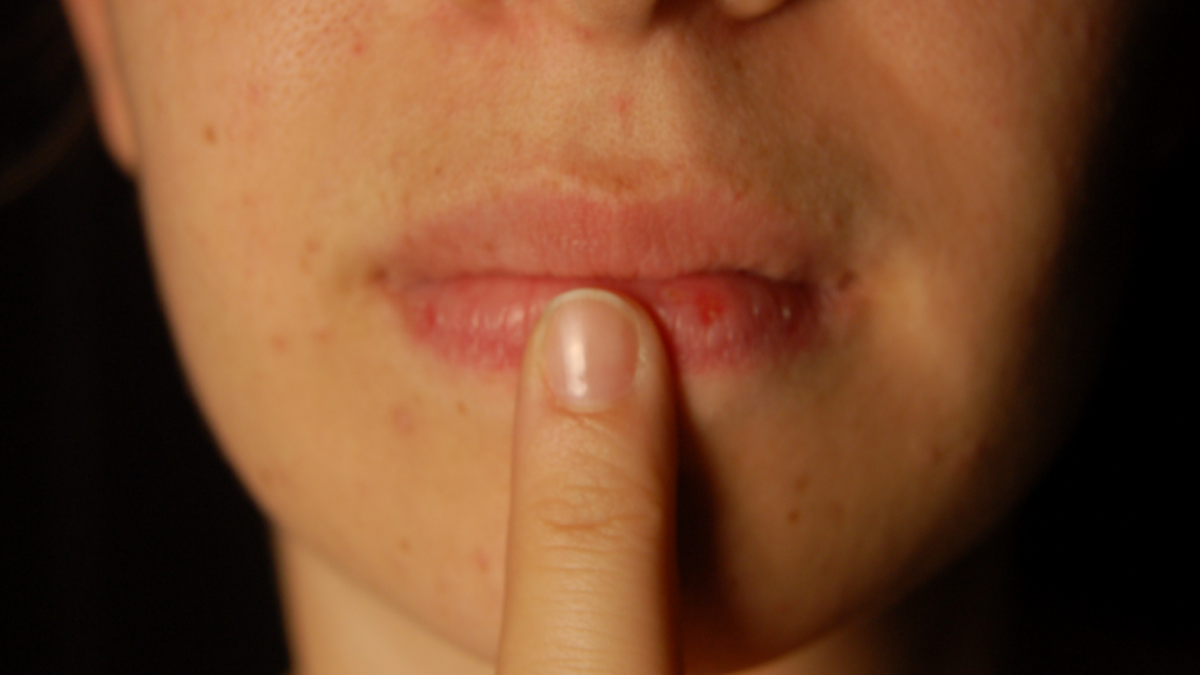
Busby Berkeley’s tribute to screen sex goddess Mae West as imagined by director Paul Bush. Due to the explicit sexual imagery a picture cannot be shown.
Challenging the boundaries between fiction, documentary and animation, Paul Bush is a one-of-kind experimental filmmaker.
A self-taught filmmaker and a lecturer at countless art and film courses around the world, Paul Bush has been producing experimental films since the 1980s. Perhaps most well-known for the frequent use of stop-frame animation, his works are relentlessly inventive and ambitious, and have won him numerous awards. Bush's films challenge the boundaries between fiction, documentary and animation and showcase various experimental techniques. But above all, beauty is central to his oeuvre, whether he focuses on time, narrative, history or storytelling. Kaboom thinks it's time to dedicate a retrospective to Paul Bush... with Paul Bush. He will be talking to animator Anna Eijsbouts and you'll get to see various of his shorts that prove why he is such a respected name in the experimental film scene.
Busby Berkeley’s tribute to screen sex goddess Mae West as imagined by director Paul Bush. Due to the explicit sexual imagery a picture cannot be shown.
.jpeg?format=w480)
"Elegy is a form of poetry natural to the reflective mind. Sorrow and love became the principal themes of the elegy. Elegy presents everything as lost and gone or absent and future." (Samuel Taylor Coleridge)
Paul Bush's Elegy is stone and light, just stone and light.
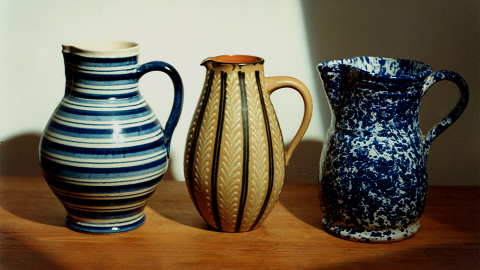
Furniture Poetry (2000) is a playful philosophical piece inspired by a Ludwig Wittgenstein quote. Bush manipulates tables, chairs, and various domestic objects into a frenzied and comical dance.
.png?format=w480)
His Comedy is no comedy, yet a comedy. It's Paul Bush's vision of Dante's descent into hell. What Dante sees is not simply an apocalyptic vision of the punishment that awaits sinners after death but also the very real horrors committed by human hands on Earth. Inspired by Gustav Dore's nineteenth century woodblock engravings, the film's images are produced by engraving directly into the surface of colour filmstock.
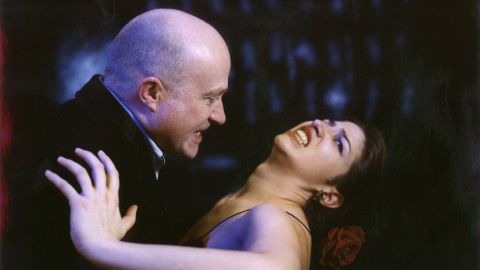
Imagine that the camera is possessed with a psychosis similar to human schizophrenia; suppose that this disease subtly changes every single frame of film while leaving the narrative superficially intact. Then imagine that these symptoms came on as a result of the trauma of recording bizarre or horrific events, for instance those of the 1941 horror film Dr Jekyll and Mr Hyde. Scenes from the Victor Fleming movie are restaged frame by frame with new performers occupying the body spaces of Spencer Tracy, Ingrid Bergman, etc...
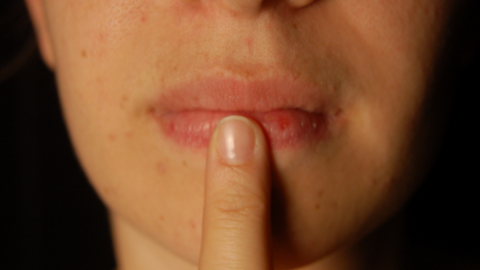
"It is only shallow people who do not judge by appearances" (Oscar Wilde)
Lay Bare is a composite portrait of the human body - assembled from details captured by close-up photography of over five hundred men and women of all ages - revealing it as it is only rarely seen in the most intimate relationships we have with our family or our lovers: erotic and comic, beautiful and vulnerable.
.jpg?format=w480)
An animated extravaganza of plastic collected from beaches, roadsides, attics and junk shops. This is an elegy to a love affair that has gone sour, a fond farewell to that most beautiful material that has enslaved our planet: plastic.
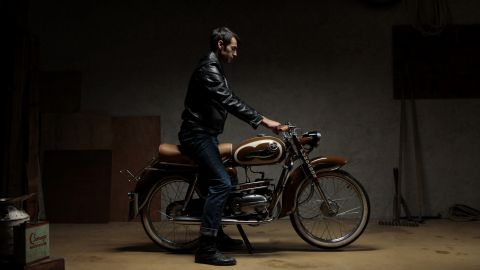
Hundreds of motorbikes are animated frame by frame in this homage to the iconic motorcycle design and culture of the 1950s and 60s. A rider prepares his bike and departs on an idealised journey into the countryside and into the future.
.png?format=w480)
The day is Friday, August 27, 2004. The Samurai are twenty six citizens of Tokyo, stopped as they pass in the busy Shinjuku business and entertainment district of the city. The warriors are asked to stand completely still for five minutes in front of a time- lapse camera while the teeming crowds of the biggest city in the world stream by.
%2016x9.jpg?format=w480)
Here, we witness a work of art coming into being and taking shape. This film is a radical reworking of an etching by the Italian artist Giorgio Morandi, brought to life by engraving frame by frame directly into the photographic emulsion of colour filmstock. The viewer is taken on a journey through the etching, accompanied by the sounds that the artist might have heard from his window as he worked.
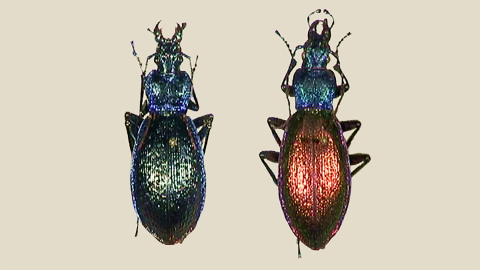
More than three thousand insects appear in this film each for a single frame. As the colours glow and change across their bodies and wings it seems that the genetic programme of millions of years is taking place in a few minutes. It is a rampant creation that seems to defy the explanations of evolutionists and fundamentalists. It is like a mescaline vision dreamt by Charles Darwin.
The film is inspired by the insect collection of Walter Linsenmaier in the natural history museum of Luzern. As each insect follows the other, frame by frame, they appear to unfurl their antennae, scuttle along, flap their wings as if trying to escape the pinions which attach them forever in their display cases. Just for a moment the eye is tricked into believing that these dead creatures still live . . .
Kaboom Animation Festival is the one-stop-shop for the latest and greatest in all things animated. Ranging from cutting-edge experimental arthouse to colorful stories for families and kids, Kaboom will cater to the animation needs of all. Yes, even yours, my amazing weirdo friend!
© 2026. Website by Have a Byte!