How do we envision the world we inhabit, and what does this tell us about the way we think of life in general? The landscape has always been a popular image in art, one that is tightly connected to our dreams and ideals, our vision of Utopia. Celebrating the 500th anniversary of Thomas More’s Utopia, this exhibition explores our shifting perceptions of nature and our involvement in it.
Through installations ranging from experimental animated film and games, to architectural structures, this exhibition represents different animated views on our surroundings: Shifting perceptions of nature as a place of peace and quiet to an Anthropocene environment increasingly affected and modified by man — perhaps drawing us closer to Dystopia?
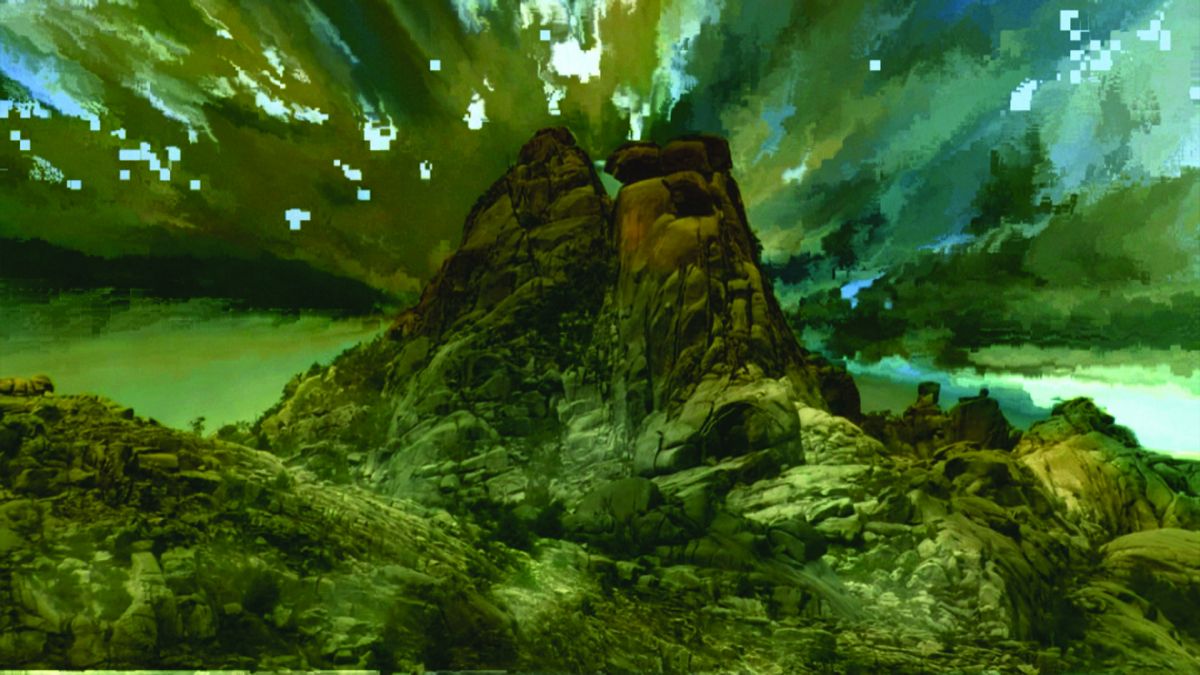
In #29, the constant zooming into certain landscape features displays a constant exploration for an argument. The camera’s assessment becomes the vessel for embedded associative imaginations and desires linked to the absent argument. #29 belongs to a series, researching the relationship between landscaperepresentation, perception and the unconscious. During editing crucial data is removed from the mpeg-stream, forcing software to re-interpret visual information.
Bubi
Jan Sramek / Veronika Vlková
Czech Republic, 2012
5 min.
Experimental animation film uses vector graphics and is a product of collaboration between the visual artist Jan Sramek and Veronika Vlkova.
Critical Blocks
Maykel Roovers
The Netherlands, 2012
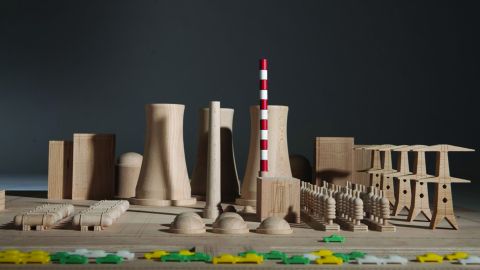
I selected a number of buildings that epitomize today’s zeitgeist. I transformed these architectural types into toy blocks. In doing so I have two objectives. The first is to shed a light on the excessive nature of contemporary large scale architecture – the mega factory – by using the poor and abstract form language of toy blocks. My second objective is to make full use of the contrast between the harshness of contemporary architecture and the illusory children’s world of friendliness and unlimited possibilities cultivated by adults.
It’s the end of the world and you know it
Peter van der Es
The Netherlands, 2016
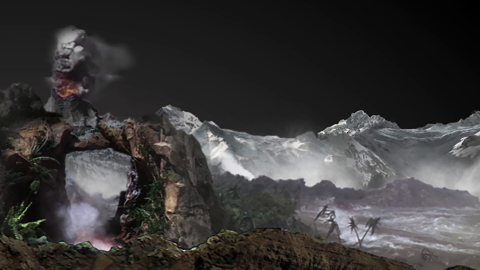
Video-collage made from found-footage of renowned films about the end of times.
Lowland
Jasper de Beijer
The Netherlands, 2012
7 min.
For this project de Beijer has been focusing on the landscape drawings, etchings and engravings from Dutch masters like Hercules Seghers, Jacob van Ruisdael, Rembrandt van Rijn and Vincent van Gogh. Their vision and interpretation of the Dutch landscape has been the starting point for developing his own vision on the landscape through the ages; untouched and dynamic at the same time.
Mountain
David O'Reilly
United States, 2014
MOUNTAIN is an ambient procedural mountain game.
Movi
Eelco Brand
The Netherlands, 2015
Als synthetische spiegelingen van de tastbare wereld, construeert Brand gedetailleerde interpretaties van de realiteit. Digitale werken waarin de suggestie van leven en fragiliteit balanceren tussen een geloofwaardige weergave en de klinische verschijningsvorm van een digitale façade. Hoewel hij ooit als schilder begonnen is, werkt Brand al jaren enkel in het digitale domein. Vanaf zijn vroegste werken is het verbeelden van natuur-landschappelijke scènes een constante . Van de romantische atmosfeer in nachtelijke bostaferelen tot absurdistische en humoristische sequenties waarin onnatuurlijke objecten transformeren binnen de logica van de virtuele onstoffelijkheid.
Raoul Island
Naïmé Perrette
The Netherlands, 2016
Raoul Island is a remote volcanic island in the Pacific Ocean. There is only one house on this otherwise uninhabited island, to welcome a team of rangers and volunteers who come every year for a few months to remove alien vegetation. Except from them, no one is allowed to step on the island. Naïmé Perrette is interested in this micro society that deploys so much effort to adjust a land to fit an idea of original nature. She looks at this particular scenario as an echo of a more general idea of state control over spontaneous growth.
She layers images, as much as she layers narrations in her video works. She twists perspectives by deconstructing colour channels, and by assembling different angles of vision of the same entity. Her prints help her flesh out visual ideas relating to environment and display, elements that feed back into decisions she makes about her films and video installations. She examines the limits of printing techniques and how they could exist alongside her films or in response to them - how the materials themselves can speak of a particular time and place or mood.
Sleeping Gold
Grietje Schepers
The Netherlands, 2014
The quiet rustling of the gold throws us off balance. This heap of solid gold breathes at a human pace. The rhythm breathes life into otherwise inanimate matter, gathering an even more disquieting effect, since we now attribute human characteristics to precious stones. This inanimate though breathing being becomes a friendly companion; it transforms an empty space to a shared one, shifting the focus from being alone to being together. Where we often feel that technique only creates a dehumanising effect, in this installation it has quite the opposite of the effect, we start to feel related. It is only natural to feel close to things that breathe.
Terra Incognita
Sanne Vaassen
The Netherlands, 2013
Untitled
Roos van Haaften
The Netherlands, 2016
Roos van Haaften maakt lichtwerken op muren - ze tekent met reflecties en schaduwen. Haar beelden kunnen door hun virtualiteit ieder moment van gedaante veranderen. Door met theaterlicht te projecten in de ruimte, rondom objecten en figuren, ontstaan fotografische en filmische scenes met een beklemmend karakter. De middelen waarmee ze haar beelden tot stand brengt zijn alledaags: het zijn kruimels
Vallis City
Rik Smits
The Netherlands, 2015
My work deals with the relation between religion and capitalism, which is depicted in a scenery of architectural landscapes/cityscapes. These landscapes show the contours
of an imaginary city. A city which breathes the human ambition towards power and status. Its large scale buildings reminds us of the industrial utopia’s which prevailed in the human mind, but failed to shine or provide peace and humanity in the real world.The most prominent facet of this city is perhaps its appearance, from which one can easily read that the main ideology of its inhabitants is Capitalism. But this ideology is beginning to manifest itself in a religious manner, and will maybe even become a religion itself.
And in a way that it will be seen as a redeemer. The city shows the self-confidence of an utopia but also the emptiness of a deserted ruin. The over towering Art Deco skyscrapers stand proud like medieval cathedrals, their decoration reminds us of the rich symbolism of the early Christian art, with all its references to spiritual suppression and revelation. The skyscrapers cast their shadow over desolate and damaged monuments which represent the lost moral standards and values of humanity, which have been exchanged for the never-ending spiritual search for capitalist redemption, which provides us with the luxury and convenience of modern day life.
Om de beste ervaringen te bieden, gebruiken wij technologieën zoals cookies om informatie over je apparaat op te slaan en/of te raadplegen. Door in te stemmen met deze technologieën kunnen wij gegevens zoals surfgedrag of unieke ID's op deze site verwerken. Als je geen toestemming geeft of uw toestemming intrekt, kan dit een nadelige invloed hebben op bepaalde functies en mogelijkheden.
Functioneel
Always active
De technische opslag of toegang is strikt noodzakelijk voor het legitieme doel het gebruik mogelijk te maken van een specifieke dienst waarom de abonnee of gebruiker uitdrukkelijk heeft gevraagd, of met als enig doel de uitvoering van de transmissie van een communicatie over een elektronisch communicatienetwerk.
Voorkeuren
De technische opslag of toegang is noodzakelijk voor het legitieme doel voorkeuren op te slaan die niet door de abonnee of gebruiker zijn aangevraagd.
Statistieken
De technische opslag of toegang die uitsluitend voor statistische doeleinden wordt gebruikt.De technische opslag of toegang die uitsluitend wordt gebruikt voor anonieme statistische doeleinden. Zonder dagvaarding, vrijwillige naleving door je Internet Service Provider, of aanvullende gegevens van een derde partij, kan informatie die alleen voor dit doel wordt opgeslagen of opgehaald gewoonlijk niet worden gebruikt om je te identificeren.
Marketing
De technische opslag of toegang is nodig om gebruikersprofielen op te stellen voor het verzenden van reclame, of om de gebruiker op een site of over verschillende sites te volgen voor soortgelijke marketingdoeleinden.

.jpg?format=w480)

.jpg?format=w480)