A mix of stories, new and old, about and by different indigenous people.

Animation has a long history of plundering folklore and fairytales, but in recent years more and more animated stories are told by indigenous people and different ethnic groups. It's about time! Kaboom brings you a mix of stories - new and old - by and about often forgotten people across the world.


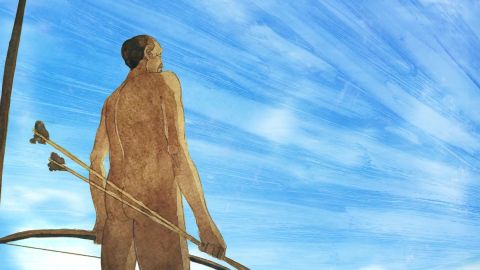
A long time ago, a Kukama god stood balancing in his canoe, holding aloft his bow and arrows. The arrows fell one by one, creating vast, winding rivers.

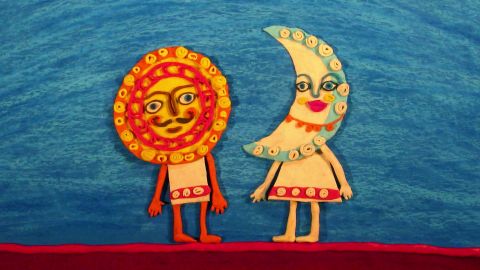
Tradition says that thanks to a rabbit man was saved from the flood and because of his curiosity we can now remember him every night when we see the moon.

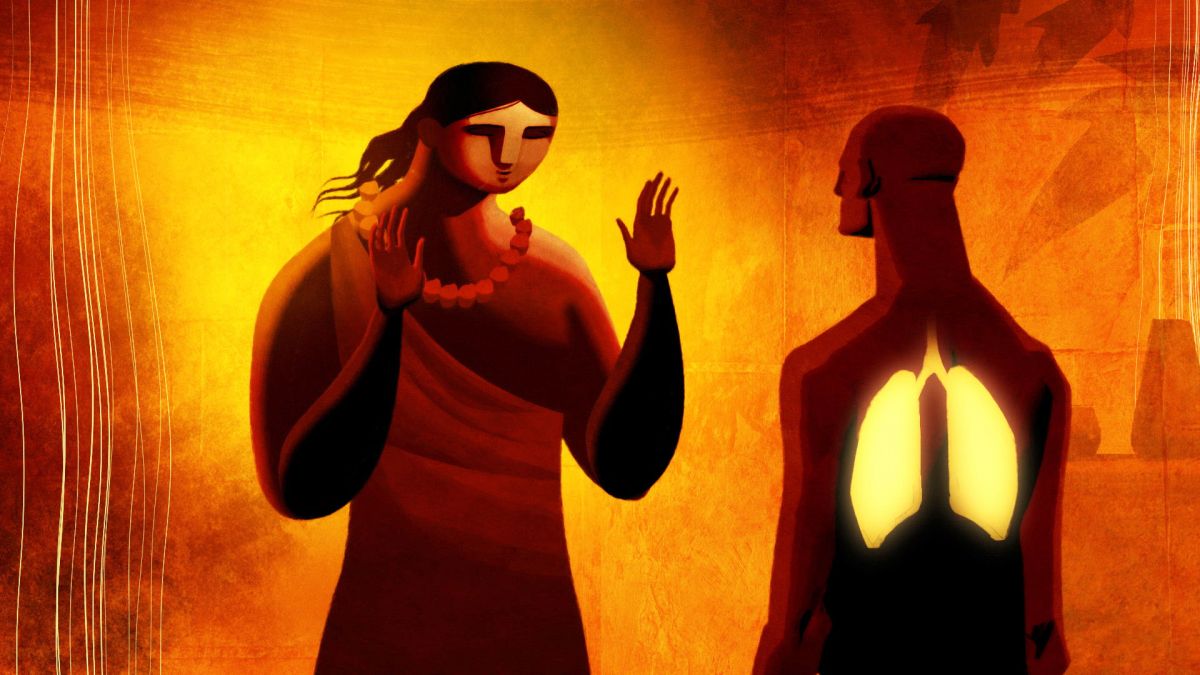
Based on a moolelo, a combination of history and legend, KAPAEMAHU tells the story of four mahu - individuals of dual male and female spirit -who long ago brought the healing arts to Hawaii and imbued their powers on four giant boulders. The stones still stand on Waikiki Beach, but the true story behind them has been hidden – until now.

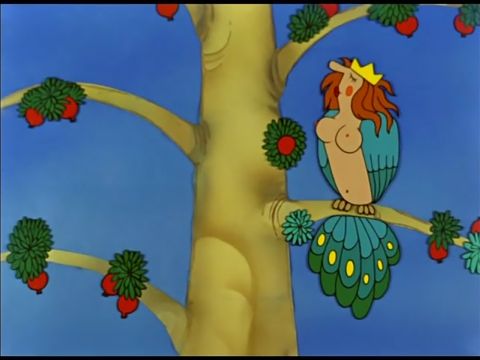
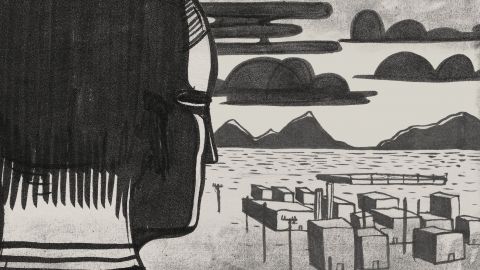
The little Kikos was sent to fetch water. The whole family in turn suggests further development, from that the boy would certainly be drowned in the well, to the fact that by some miracle, Kikos would become a king.
The film ingeniously ridicules the Armenian habit necessarily predict in advance all the possible turns of fate. (based on H. Tumanyan 's tale)

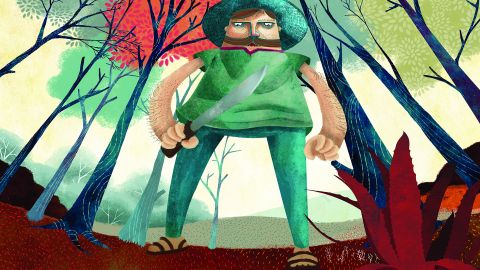
A rejection of the Lightning God causes him to retaliate his courage against the people by taking away the rain. A reckless young man will do everything to return the rain to his town, a battle that we can now remember when we see the winds and the clouds in the sky.

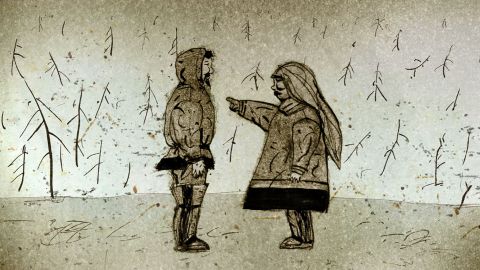
A Khanty man went hunting but did not bring home any catch. A wife stealthily followed her husband into the forest. The hunter lay down, took his eyes out and said, “Semlek re-rem-rem”. The wife seized the husband’s eyes. The next day an elk was trotting by the camp. The hunter killed the elk. Later the hunter entered the conical tent where the wife secretly ate the meat. The wife thought that her brother-in-law had come and covered her face as it was the Khanty custom to avoid husband’s male relatives seeing the wife’s face. The wife complained that her husband was lazy and said that she had hidden his eyes in a box. They began to quarrel.
.jpg?format=w480)
Angkuksajaujuq: The Shaman’s Apprentice is an animated adaptation of an Inuit traditional story,
from the North Baffin region.
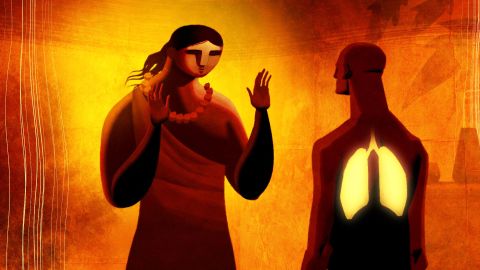
The Shaman’s Apprentice tells the story of a young shaman in training who must face her first
test—a trip to the underground to visit Kannaaluk, The One Below, who holds the answers to
why a community member has become ill. Facing dark spirits and physical challenges, the young
shaman must trust the teachings of her grandmother and mentor, Ningiuq Angakkuq, and learn
to control her fear.
This is an exciting narrative to bring to a larger audience, as it is steeped in Inuit traditional beliefs
and spirituality. The goal of the film is to engage a contemporary audience while ensuring the
story’s authenticity is preserved. Director Zacharias Kunuk and the production team worked hard
to accurately represent the northern community and time period with sufficient detail. The goal
was to transport the audience to another place and time in the world, and seamlessly carry them
into the spirit world of Inuit traditional beliefs.

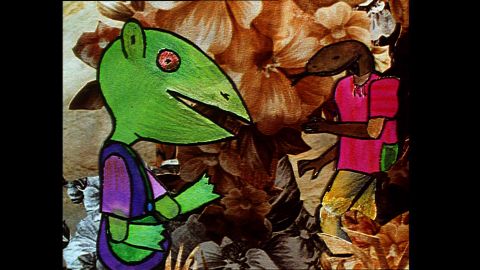
Rooted in the oral tale recounted by the Tetela in Sankuru, Democratic Republic of Congo, this story explains how it came to be that the Fox ate the Chicken, the Chicken ate the Termite, the Termite ate the Stick and the Stick ate the Toad, when the Toad arrives at his in-laws’ home and is served a meal with a single spoon, sparking off a terrible row!