Groundhog Day meets video game. Each time the aliens kill Rita, her day starts over again. As if she wasn’t depressed enough already.
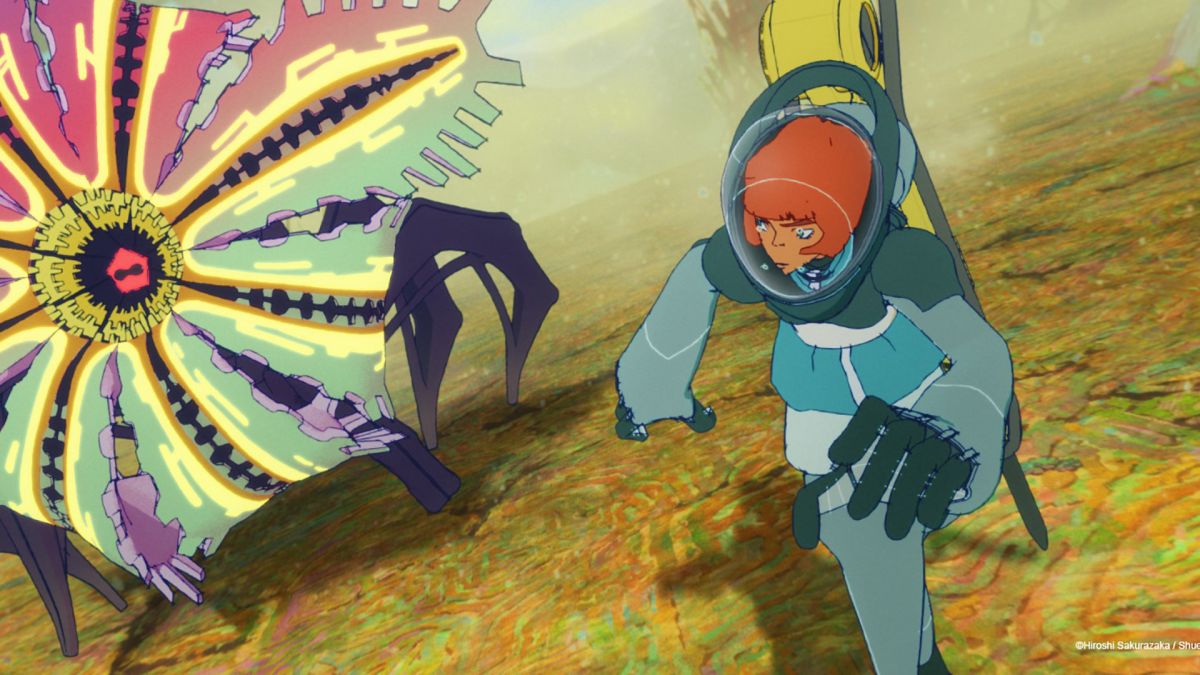
First came Hiroshi Sakurazaka’s ‘light novel’ in 2004. Ten years later, we saw adaptations as manga, American graphic novel, and the Hollywood blockbuster Edge of Tomorrow. And now, an anime directed by Kenichiro Akimoto. Each time, the story starts over, but slightly different.
Which, funnily enough, is exactly the premise of All You Need Is Kill. In its Groundhog Day (1993) meets video game concept, each time you die, your day starts over, you just know a little bit more about what’s coming (something about an alien invader and the total annihilation of Earth).
The two most significant changes made by Akimoto and his team are that the main characters aren’t military anymore, but civilian, and that the lead role has shifted from Keiji to Rita. With as an additional story layer the fact that Rita – although the word isn’t explicitly mentioned – is depressed. Which neatly fits the pattern of each day feeling the same, and having no interest at all in tomorrow.
Which effectively turns All You Need Is Kill – with all its clearly choreographed fight scenes and the angular, sketchy design for which Studio 4°C is known – into a series of therapy sessions (after all, therapy also requires endless repetition for even minor progress): unless Rita wants to keep dying for the rest of her life (‘Live. Die. Repeat’ was Edge of Tomorrow’s concise slogan), she has no choice but to take an interest in every single detail of today in an attempt to finally make it to tomorrow.

First came Hiroshi Sakurazaka’s ‘light novel’ in 2004. Ten years later, we saw adaptations as manga, American graphic novel, and the Hollywood blockbuster Edge of Tomorrow. And now, an anime directed by Kenichiro Akimoto. Each time, the story starts over, but slightly different.
Which, funnily enough, is exactly the premise of All You Need Is Kill. In its Groundhog Day (1993) meets video game concept, each time you die, your day starts over, you just know a little bit more about what’s coming (something about an alien invader and the total annihilation of Earth).
The two most significant changes made by Akimoto and his team are that the main characters aren’t military anymore, but civilian, and that the lead role has shifted from Keiji to Rita. With as an additional story layer the fact that Rita – although the word isn’t explicitly mentioned – is depressed. Which neatly fits the pattern of each day feeling the same, and having no interest at all in tomorrow.
Which effectively turns All You Need Is Kill – with all its clearly choreographed fight scenes and the angular, sketchy design for which Studio 4°C is known – into a series of therapy sessions (after all, therapy also requires endless repetition for even minor progress): unless Rita wants to keep dying for the rest of her life (‘Live. Die. Repeat’ was Edge of Tomorrow’s concise slogan), she has no choice but to take an interest in every single detail of today in an attempt to finally make it to tomorrow.

Om de beste ervaringen te bieden, gebruiken wij technologieën zoals cookies om informatie over je apparaat op te slaan en/of te raadplegen. Door in te stemmen met deze technologieën kunnen wij gegevens zoals surfgedrag of unieke ID's op deze site verwerken. Als je geen toestemming geeft of uw toestemming intrekt, kan dit een nadelige invloed hebben op bepaalde functies en mogelijkheden.
Functioneel
Always active
De technische opslag of toegang is strikt noodzakelijk voor het legitieme doel het gebruik mogelijk te maken van een specifieke dienst waarom de abonnee of gebruiker uitdrukkelijk heeft gevraagd, of met als enig doel de uitvoering van de transmissie van een communicatie over een elektronisch communicatienetwerk.
Voorkeuren
De technische opslag of toegang is noodzakelijk voor het legitieme doel voorkeuren op te slaan die niet door de abonnee of gebruiker zijn aangevraagd.
Statistieken
De technische opslag of toegang die uitsluitend voor statistische doeleinden wordt gebruikt.De technische opslag of toegang die uitsluitend wordt gebruikt voor anonieme statistische doeleinden. Zonder dagvaarding, vrijwillige naleving door je Internet Service Provider, of aanvullende gegevens van een derde partij, kan informatie die alleen voor dit doel wordt opgeslagen of opgehaald gewoonlijk niet worden gebruikt om je te identificeren.
Marketing
De technische opslag of toegang is nodig om gebruikersprofielen op te stellen voor het verzenden van reclame, of om de gebruiker op een site of over verschillende sites te volgen voor soortgelijke marketingdoeleinden.